

Why the Biggest Barriers to Recovery Often Happen Before Surgery
When an injured worker is told they need surgery, it may seem like the hardest part of the claim is over. The diagnosis has been made, the treatment plan is in place, and everyone expects the procedure to move the worker toward recovery and return to work.
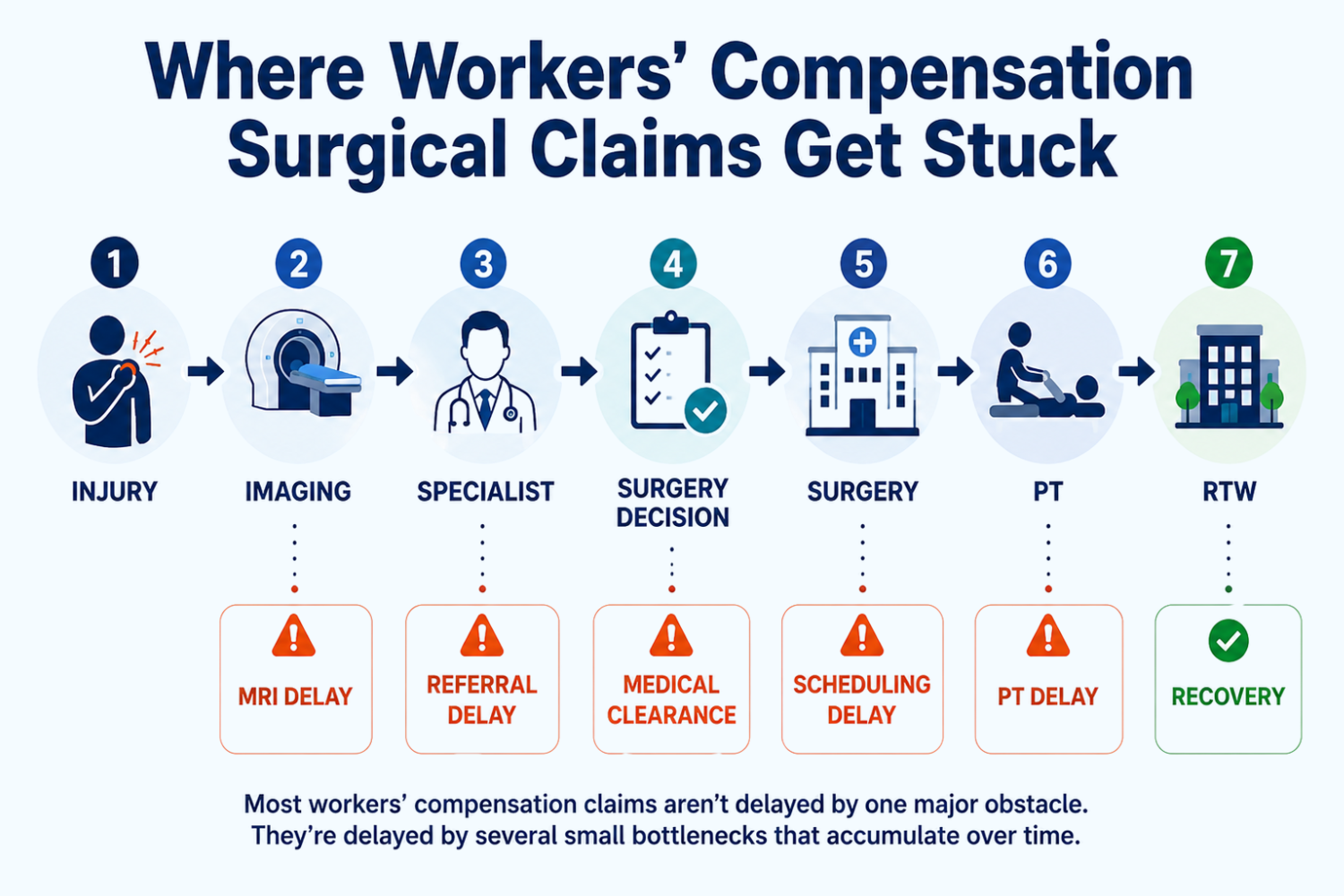
Unfortunately, that isn’t always what happens. Some of the longest and most costly delays in a workers’ compensation claim occur after surgery has been recommended but before the patient ever reaches the operating room. These delays rarely come from the surgery itself. Instead, delays are often caused by a series of small things like delayed imaging or communication breakdowns. Small delays that turn into increased cost may include:
- A delayed MRI
- A referral that sits too long
- A missed medical clearance appointment
- Incomplete communication between providers
Together, these “small” delays can add up, stretching the claim out from a six-week treatment plan into several months of increasing medical costs and time away from work. Understanding where these bottlenecks occur is the first step toward preventing them.
Small Workers’ Compensation Bottlenecks Can Lead to Bigger Claim Delays
Most surgical claims aren’t delayed by one major event. Instead, recovery is slowed by multiple small interruptions that build on one another. Each step may seem routine; however, every delay postpones the next part of treatment and the overall return-to-work timeline. Some of the most common bottlenecks or delays include:
- Waiting for advanced imaging such as an MRI or CT scan
- Delays obtaining referrals to the appropriate fellowship-trained orthopedic specialist
- Insurance authorizations and surgical scheduling
- Medical clearance appointments and additional pre-operative testing
- Physical therapy scheduling before or after surgery
- Transportation or other patient issues
- Communication breakdowns between providers, adjusters, employers, and case managers
Getting the Right Specialist Early in a Workers’ Comp Claim Matters
Not every orthopedic surgeon performs every procedure, and not every injured worker is initially referred to the physician best suited for their condition. For complex shoulder, spine, hand, foot and ankle, sports medicine, or joint reconstruction cases, referral to a board-certified, fellowship-trained orthopedic surgeon can make a significant difference. Early access to the right specialist often reduces unnecessary delays. BICMD’s Center of Excellence expediates appointments, avoids duplicate testing, and creates a more efficient pathway to definitive treatment.
Choosing the appropriate surgeon from the beginning doesn’t just improve clinical decision-making, it can shorten the entire timeline of a workers’ compensation claim.
Care Coordination Is Critical to Keeping Workers’ Compensation Surgery on Track
Even after surgery has been approved, numerous moving parts must come together before treatment can occur. Without active coordination many small, separate tasks (that involve multiple offices) may not occur due to poor communication. The result is an unnecessarily long timeline and frustration for everyone involved. These moving parts that need careful coordination include:
- Scheduling the surgery
- Obtaining authorizations
- Coordinating the most appropriate surgical facility
- Arranging medical clearance for surgery
- Confirming availability of necessary tools (like implants) needed during surgery
- Preparing post-operative physical therapy or rehabilitation.
Clear Communication, Early in the Claims Process, Keeps Claims Moving
Every workers’ compensation surgical claim involves multiple stakeholders. Adjusters, employers, case managers, physicians, physical therapists, surgeons, and injured workers all need timely information to keep the treatment moving forward. If things like a second opinion or advanced imaging are delayed, or if work restrictions aren’t communicated, recovery slows down and costs go up. Proactive communication by BICMD’s Center of Excellence care coordinator keeps everyone involved and helps reduce interruptions or miscommunication throughout the claims process.
Faster Recovery Starts Before the Operating Room
At BICMD, we understand that successful workers’ compensation surgical management involves much more than selecting an outstanding surgeon.
Our coordinated approach helps remove many of the administrative barriers that commonly delay care. We work closely with adjusters, carriers, TPAs, employers, case managers, and providers to help coordinate care. Everything from imaging, referrals, authorizations, surgical scheduling, medical clearances, transportation, and post-operative rehabilitation is handled at our “One-stop-shop” with our Center of Excellence.
By streamlining every step of the process, our COE helps injured workers move more quickly and efficiently from diagnosis to treatment and ultimately return to work.
Need Help Coordinating a Complex Workers’ Comp Surgical Claim?
BICMD partners with insurance carriers, TPAs, self-insured employers, and case managers to simplify the surgical journey for injured workers. Through coordinated care, fellowship-trained orthopedic specialists, and evidence-based clinical oversight, we help reduce unnecessary delays and create a more predictable path to recovery and return to work.